Sunday, June 28, 2009

That's how they did it in the old times.. well, almost


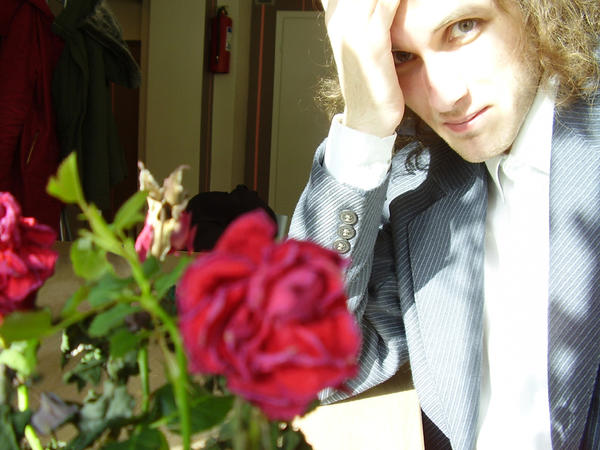
This piece I call Settecento, what means 18th century for Italian. In arthistory it is common to name artperiods with such Italian words for corresponding centuries. This digital painting got such name from me because when in university I started studying French and in one lesson we had to tell our birth years and dates, then one co-student made a joke about me being born in 18th century (probably because of my hairstyle and pale skin). And although I was really born in 1981 and everyone knows it, this "belief" got widely spread.. and I too liked the idea. So this got to be a theme for my selfportrait.. a classicistic painting with some features of soon coming romanticism period. So this is the result.. a selfportrait over what I'm really proud.


Other than that.. I have had many themes in my head on what to write, but for some reason didn't do that. My summer will be filled with painting, searching for job, little bicycle trips few days in length around Estonia and preparing for possible bigger voyage in autumn if I don't find any rason to stay in homeland.. but I hope that in between there somewhere I take some time to blog too. Oh and I plan to start writing a book too, yet this may take as long as ever.. I have nowhere to hurry with that.


Thursday, April 16, 2009

An old piece

fight for life
fight for dreams
fight for light
fight to see
do not kill
fight by other means
fight for free will
fight for me
fight for survival
fight for salvation
death and denial
greed and betrayal
fight for sunshine
fight to love
gather your strength
and choose the righteous war
fight for the music
fight for truth
fight not to lose it
fight for youth
fight for humanity
fight for naturality
change slavery to liberty
fight is only way to immortality
rasta against greenweed's illegality
religion versus materiality
everyone has own delight
everyone has own fight
28 times more i say
fight
fight for your...

Saturday, April 11, 2009

Pärast pimedat talve

To live is like to love.. all reason is against it, and all healthy instinct for it – Samuel Butler
Uskumatu küll, aga töö puudumine, majanduskriis ja oma vanematest sõltumine toovad endaga kaasa tõsise tuju languse. No mis nii uskumatu, aga isegi mina, kes ma usun vähese raha ja vähese töö tegemise kasulikkusesse, leidsin ennast minule täiesti mitteomasest negatiivsete tunnete puntrast. Ununes missioon maailma muuta, kadus teotahe, tekkisid viha ja masendus. Kõik hea justkui kadus mu peast kuhugile. Veel enamgi, kõige selle jama kohapealt tekkis justkui pimedus - midagi ei osanud enam ette võtta. Ma küll ise tundsin ju kogu aeg, et asjad on valesti jaminu mõtlemine on erinev sellest, millesse ma tegelikult usun ja ma isegi teadsin ju ka oma varasemaid nägemusi, aga miskipärast need enam ei kehtinud. Justkui täielikult ununes, et ma ise olen enda mõtlemise peremees ning ma ise loon tahtejõudu. Need ei tulene millegist välisest, mis järsku võiks väheneda või ära kaduda. Ma polnud juba kaua mõelnud, et elu on kõik crap ja seda poleks üldse vaja. Seda enam tundub see jõhkralt irooniline, et sügisel ma ju kirjutasin sellest, kuidas noortel elutahe kaob.
Õnneks tuli nüüd kevad ja koos päikesega tõusis horisondi tagant ka minu tuju. Mitte iga aasta talvel ei ole ma niimoodi masenduses, kuid aktiivsus väheneb küll ja veidi melanhoolsemaks muutun vast ka. Sel aastal oli aga asi hullem ja tuleb tunnistada, et selle põhjuseks ongi, et talveperiood ühtis probleemidega tööd leida. Aga miks see nii laastavalt mõjub, kui ma vähese rahaga harjunud olen? See on ju täiesti loomulik, et võimetus tööd saada hoolimata, et mul on hea kõrgharidus ja, et ma selle nimel ebanormaalselt palju "võimlen" ning ennast, oma põhimõtteid ohvriks toon, alandab selgelt enesehinnangut. Siiski on asjal ka puht majanduslik külg. Terve ülikooli aja olin ma pärast selle lõpetamist endale oma kodu luua ja nüüd järsku pidi tõdema, et mida ma ka ei proovi, ei taha see teoks saada. Siis avastad järgmiseks, et kriis aina süveneb. Isegi kui olen nii vähe nõudlik kui üldse saab, siis sõpradega tahaks ikka kokku saada, käia kunstinäitusel või pelmeenikohvikus, vahel väikese veini juua, võtta üle pika aja osa mõnest mõnusast reggae peost. Aga ühel hetkel pole isegi selleks võimalust. Siis tundub, et ilma rahata ei ole sa enam midagi väärt. Sul pole võimalik teha seda, mida su sõbrad sindkutsuvad tegema. Päris häbi ei teki, aga endast hakkab hale, kui teistega kokku saada. Vaikselt areneb isiklik väike sotsiaalne kriis. Vägisi tekib mõte, et sellisena pole sind kellegile vaja, sest sa oled pidur, oled igav ja tülikas oma muredega.
Ega ma pole tegelikult ikka veel tööd saanud ja raha hetkel peaaegu pole, tehes mind täielikult sõltuvaks vanematest. Seda hullem, et nende arust on kõik minu enda viga ja seepärast pidevalt vingutakse ka veel mu kallal. Aga nagu ma ütlesin, on inimese tahe ja emotsioonid pigem omavahel seotud, mitte seotud majandusliku olukorra või kindla kohaga maailmas. Selle tahte peadki siis kusagilt enda seest peidust üles leidma ning kasutama seda mõtlemisvõime, aktiivsuse ja positiivsemate emotsioonide taasleidmiseks. Sealt edasi võib elu küll olla endiselt raske, kuid vähemalt väärtuslik. Ma olen võitleja.
Tööturu kriisist veel nii palju, et veidi aega tagasi vaatasi jälle "Foorumit", kus oli teemaks loomulikult majanduslangus ja otsiti võimalusi sellest edukalt välja tulekuks. Külalisteks olid erinevad kõvad majandustegijad ja targad mehed majandus kõrgkoolidest. Kuigi tavalise selles saates areneva kõva vaidluse asemel, näitasid need mehed väga head üksmeelset arvamust ja loogilise arendusega diskussiooni, oli minu jaoks nende mõtetes mitu küsitavat kohta. Neid ma siin välja tooksingi.
Minu jaoks oli eriti häiriv ütlus selle kohta, et ümberõpe ja suur tööjõu ringlus on täiesti normaalne. Nojah, majandusele tähendab see jõudu, aga kas keegi ka inimfaktorile mõtleb. Jällegi tuleks siinkohal korrata, et mitte inimene ei peaks olema süsteemi jaoks vaid süsteem inimese jaoks. Kui peetakse normaalseks, et üks inimene ei peagi kaua sama töö peal olema, vaid pidevalt ootamatuid vallandamisi ja koondamisi ning nendega kaasas käivaid individuaalseid probleeme trotsides pidevalt uut tööd otsima. Vahepeal veel lisaks pidevalt uusi ja uusi erialasid õppima, et kinni püüda mõni tööots, millest sa kunagi unistanud pole, millega sul pole mingit ühendust ja kus seepärast ülemused pidevalt sinu väikese entusiasmi kohta märkusi teevad. Selle inimese jaoks tähendaks see seda, et tema elus ei ole mingit stabiilsust. Vähe sellest, et kahaneb ta majanduslik kindlus, ka ükski pank ei taha sulle laenu anda (mitte, et see üldse eriti hea oleks), sest sa pidevalt reisid ühest töökohast teise, saad väikest palka, aga kõige hullem on see, et taoline elu viib väga kergesti stressi ning väärtushinnangute kriisini. Inimene peaks pidevalt juurde õppima, kuid kas on tal selleks kriitilist sundust vaja. Arvate, et kui pidevalt uut juurde õppida, siis peaks ju arvamus enesest tõusma ja profesionaalsus suurenema. Jah, idealistlikus pildis küll, kuid kui siis ikkagi ei saa oma töös ja elus kindel olla, siis tekib inimesel hoopis arusaam, et ma olen tark, aktiivne ja veel kümmet eri moodi hea tegija, kuid tegelikkuses ei huvita see kedagi. Tegelikkuses olen ma lihtsalt võimuliinide ja/või korporatiivsete juhtkondade mängukann. Ja siis imestatakse, et miks on paljudel oma ülemuste või eksülemuste vastu viha ning rahulolematus kogu süsteemi suhtes.
Teiseks.. riigis, kus juba varakult, võibolla isegi enne kogu ametliku hariduskaruselli algust, kindlalt aga juba algkoolis, üritatakse meile selgeks teha, et meie jaoks on kõik võimalused avatud ning meil on õigus ennast arendada just meie enda soovide ning loomupäraste eelduste järgi. Vähemasti mind nii õpetati ja üldiselt see oleks ka normaalne, sest inimene ei saa ennast motiveerida tegelema millegiga, milleks tal pole ei huvisid ega eeldusi. Töö juures on ju aga motivatsioon väga tähtis. Kõvast rahapatakast aga ei piisa ja nii kui nii ka palkasid pidevalt nüüd vähendatakse, võetakse vähemaks kõiksuguseid soodustusi ning motiveerivat ei ole enam kuskilt otsast näha.
Mina, kes ma pärinen suguvõsast, kus kunstiga tegelevaid inimesi on palju, olen juba sünnipäraselt huvitatud kultuurist ja selle arendamisest. See on mul geenides. Nüüd olen ma magistrikraadiga kunstiõpetaja haridusega noormees, kellel pole juba pea terve aasta tööd olnud. Aga ma tean, et miski, mis jääks väljapoole kunsti, kultuuri, filmitööstust, haridust, disaini ja ütleme ka reklaami ning mõne huviala järgi veel lisaks ehk ajalugu ja poliitikat, siis nende asjadega ei saaks ma hakkama ega oleks kunagi rahul enda eluga, mis mingi suvalise töö ümber oleks ehitatud. Ma olen küll väga laialdaste huvidega, aga siiski tundub piir peal olevat. Inimene peab küll pidevalt edasi arenema, kuid seda ikka selles valdkonnas, kuhu kuulub tema süda. See annab inimesele jõudu, kui ta saab öelda, et selle ala olen ma endale leidnud ja valinud, see mulle meeldib, seda teen ma hästi ja seepärast olen ma hinnatud.
Need majandusanalüütikud tõid ühiskonna eduka juhtimise kohta näite, et maailma suurimate ja võimsaimate majandustega riikide valitsused koosnevad enamasti juura ja majandusala asjatundjatest. Mul tekkis seepeale küll küsimus, et kui palju tunneb siis vastavalt üks või teine spetsialist haridust, tervishoidu, reaalpoliitikat näiteks välissuhetes, kultuuri või ausalt öeldes ükskõik millist nende otsese elualaga seotud sfääri vajadusi. Veel enam, mis saaks sellisel juhul isiku vabadustest. Kas saaks tõesti teoks kord, kus kõik on numbrite ja paragraafide järgi just süsteemi efektiivsuse jaoks korraldatud. Kui süsteem muuta sel viisil efektiivsemaks, siis kujutage ette, kui jõhker oleks otsustav kogu ja täideviiv võim. Nende suurte majandusriikide puhul saabki ju tuua hulga näiteid, kuidas piiratakse eraisiku vabadusi, kuidas vabadused on puhtalt formaalsus paberil ning kuidas tegelik võim on kas salaluure ja eliidi tipu või suurkorporatsioonide käes, kes teeb kõik, et mingil muttril poleks vähimatki võimalust midagi tegelikult muuta.
Hea küll, ma saan ju loomulikult aru, et mitte kõikide lapsepõlve roosad unistused parimast tööst ei lähe täide. Lihtsalt ei ole nii palju tellimust mõningate erialade töötajate järele, kui meie enda eelduste ja huvide põhjal tahaksime loota. Kuid see ei tähenda, et saaks normaalseks pidada olukorda, kus kodanik ei saa kuidagi oma ametiposti säilimises kindel olla või ka sellega, et hoolimata vähesele reaalsele tellimusele teatud eriala inimeste järele, käib ometi nende tööliste koolitamine täiel jõul edasi. Samal ajal toimub valitsuses aga vägikaikavedu ja suur sõnelus, et kuidas keegi midagi paremaks teeks. Ometi pole tulemusi näha. Juba tükk aega on meie riik tegelikult valitsemise ja haldamise seisukohalt olnud peaaegu paigalseisus. Arenevas riigis peaks aga ka juhtimissüsteemid arenema. Mina näiteks olen viimasel ajal hakanud nägema otsese demokraatia eeliseid ning üritanud leida tõsist põhjust, miks me ei võiks Belgia eeskujul sellise tasemeni oma riigisüsteeme arendada. Sellest aga ehk järgmises postituses.
Wednesday, December 24, 2008

The Bothersome Kings

I was at some great art exhibition. There were countless rooms filled with the works of different artists. Some artists were even present to introduce their creations. Some others were part of their artworks.
Most of the people took their time to walk and watch the art in that gigantic gallery, but not me. I rode my bicycle through there without paying attention to anything really well. At one point I came down to a video installation named “The Bothersome Kings”. That got my interest. Around the central video screen were placed posh and antique coaches, creating full square. Video itself didn’t interest me so much. It was kind of bizarre and unrelated pictures with static between them. Audio was also weird reading of series of facts which together created quite pointless story. At least that was my impression. I believe it may have had some kind symbolic meaning, but I certainly was more hit by the coaches and the name of the artwork.
I lifted my bike partly on one of these sofas and started explaining the meaning of this artwork to other viewers. I was so confident and had face like I’d be someone really important. But then i was intervened by one of the artists. He was the one who did most of the practical work with it, realizing the concept of another, a female artist. He tried to explain me that it’s not really right what I’m saying, and that his colleague and co-author knows everything about that piece and can explain it much better. Other artist started talking about their art, but then in turn I intervened her, saying: “No, you are all wrong about it. It has deeper, hidden meaning and possibly you had subconscious reasons for creating it.” Moreover, i said that I as a visitor of this exposition, am client, and client is always a king. King is always right. I have all the right to construct my own concept of it and to tell it to others as absolute truth. After that I started to acquire more and more characteristics and behavior that of a self-centered, tyrant king with absolute power. I even started to execute other visitors whom i simply didn’t like. So, unnoticed to myself i became the part of this artwork. I corroborated why it was named so. I turned into one of these bothersome kings.
This dream gave me good idea that perhaps i should make artwork of my own with the same name and meaning. Probably i would be first artist too, who has to mark out that it was done in co-operation with two other artist, whose names i sadly don’t know, because they are just dream characters. Still, i don’t think that i would copy that piece exactly. It’s just that i don’t like installations much, yet if I’d not come up with better realization and would make that kind of videoinstalletion better than in the dream, i would be even satisfied with that.

Sunday, December 21, 2008

21. detsember

Kas teie teate, kust tuleb eesti keelde sõna jõulud? Algselt ei olnud jõulu pühitsemine üldse seotud kristlusega. Tähistati hoopis talvist pööripäeva, valguse taaskordset võitu pimeduse üle, nagu enamikes paganlikes Põhja-Euroopa maades. Arvatakse, et algselt oli see germaanide tähtpäev, mis levis kogu põhjalas, keltide hulgas ja Briti saarter. Tänapäevane inglise keelne nimetus Yule (Näete sarnasust?) tulenevat vana inglise keelsetest sõnadest geōl ja geōla. Viimased aga on omakorda seotud vana põhjala sõnaga Jōl. Nende tähendusi ei ole päris täpselt osatud seletada, kuid arvatakse, et terminit kasutati maagia või palvepüha tähistamiseks. Teine võimalus on, et sõna tuleneb vana põhjala keelsest sõnast hjól (ratas, ring.. aastaring).
Praegusest jõuludest erines see paganlik püha aga mitmeti. Ka kuupäev on nüüdseks muudetud. Tegelikult pühitseti aasta ringi täis saamist ja uue algust hilisest detsembrist kuni jaanuari esimese pooleni. Siiski tuleks ära märkida, et tegelik pööripäev on olenevalt kalendrilistest erinevustest 20. ja 23. detsembri vahel, kuid enamasti oli pidustuste ja tseremooniate haripunktiks 21. detsember. Germaani kalender aga märkis selleks 25. detsembri.
Iidsed rahvad tegelesid põllu harimise, karja kasvatamise ja jahindusega, veetes suure osa oma ajast õues. Viimane oli talveti kahtlemata väga oluline toidu allikas. Aastaaeg ja ilm mängisid väga olulist rolli nende elus. Põhjala rahvad nägid päikest kui ratast, mis vahetas aastaaegasid. Seepärast pühitseti nii talve, suve kui ka kevad ja sügisest pööripäeva, sest need märkisid nende aastastes tegemistes olulisi muutusi. Kui paljudel pidustustel oli lõketel tähtis koht, siis talvisel pööripäeval võib öelda, et veel eriti. Sümboolselt pidi aasta kõige pikemal ööl tuli põlema kogu pimeda aja. Arvati isegi, et inimeste süüdatud lõkkevalgused aitavadki valguse taas võidule.
Erinevates paikades olid talvise pööripäeva tähistamiseks erinevad traditsioonid. Põhjalas nimetatakse lisaks lõkete tegemisele, lugude rääkimist ja magusa õlle joomist. Põhja-Euroopa traditsiooniks on ka õlgedest kitse või soku kuju valmistamine (oli traditsiooniks ka Eestis), mis algselt oli küll tava kits ohverdada. Germaanidel ja ka Skandinaavias oli tavaks valmistada pööripäevaks seapraadi (Rootsis näiteks tänase päevani traditsionaalne jõulutoit just see). Keltidel oli tavaks tammepuu puuvõõriku lõikamine ja selle kinkimine enda lähedastele õnnistuseks. Lääne-Euroopas põletati lõkke asemel üht eriti suurt puuhalgu või lõiku tüvest. Mitmel pool oli tavaks ka ukselt uksele käia laulmas, et andamit saada (nagu me teame tänapäeval Mardi- ja Kadripäeva traditsiooniks olevat). Vanasti oli ka see traditsioon aga mitmetel erinevatel pühadel. Seega viimasest on välja arenenud tänapäevane traditsioon kinke teha, mille lunastamiseks luuletust või laulu esitatakse. Lõpetuseks veel fakt sellest, et paganlik pööripäeva tähistamine tähendas parajat pummelungi. Tõsteti tooste jumalatele, kuningatele, kadunud kaaslastele ja kõiksugustel muudel võimalikel põhjustel. Niipalju siis rahulikest jõuludest. Ja siis lauldi jälle.
Ahjaa.. kui olete täna juhtumisi uudiseid näinud, siis panite kindlasti tähele, et ka juutide Hanuka ühtib talvise pööripäevaga.

Wednesday, December 17, 2008

True nature of the Unknown Future

The Sequel to the last posting:
To be fair with you, I’d have to say that it is hard to see the mysterious ways Unknown Future works, even harder to learn how to sneak past his tricks. Yet it’s really well worth it. Actually ol’ Americans and natives before them knew him good, although with the other names. I already gave you a hint of his most known name before our times - Trickster – demigod or mighty spirit of chaos and irregular ways the world can work, teacher of nature’s ways and nature of our own being. Yes, many of his tricks are lessons. Really unconventional education about human’s own weaknesses and strengths. At least he sees these so. Now, this means he actually wants that humans stand above his tests. Every teacher wants students to succeed. And yes, you can even learn to use his deeds for your own good.
When it seems that you are loosing the grip over your life and maybe even weird things start to happen, then you can be fairly sure that you are dealing with him. Next thing would be to try and learn his agenda with you and go along with chaos to adapt and learn. Before you even realize, Trickster has gifted you with a true freedom and wisdom to use it properly. But in the case, things are still not looking well for you, I’d advise you to add more power to your actions. He likes it.
I even don’t know exactly when Trickster vanished from wide public knowledge, but it may have been seventeenth or eighteenth century, when he caused that much chaos and started events that ended unfortunately for the most of people, that he was likened with fiends who are absolutely bad in their nature. If the last is right, it would be quite understandable why he was cast out of the favor of the people – church just didn’t acknowledge that something like that should be trusted. Soon after that, science diminished the belief into deities, spirits and other such things, and he was almost completely superseded by the way of thinking that these more or less unfortunate events are happening just out of the bad luck and things just happen, we have no power against it.
But actually Trickster hasn’t lost hope for the reconciliation and salvation of humankind. Moreover, at these times, he again sets us in front of new ordeals, because man has left nature in harms way and are living more irresponsibly than ever before. Humans have embraced many unnatural sins and disvalues that threaten not to only end our well being we now love so much, but also may set us into the trail of harming the world without any hope of reversing the current.
Not all Trickster’s actions don’t seem bad, even not at first sight. He is also the one responsible for random encounters. He also creates variance in things and happenings. He encourages to discoveries, yet warns that some of these may end with more bad created than good. And sometimes his will offers a good entertainment too. For once more, Trickster is not entirely bad. He just likes us to find our lessons through failures and successes by our own. If you fail, then you see it as your own fault, and next time you try more. Well, if you still can. Look, the bugger entrepreneur Peter just gave up and that was not the fault of the Trickster. Let’s hope there is another life beyond that one, where lad gets the lesson.

Sunday, December 7, 2008

21st century epically important truestory (with couple fictional additions)

His first name is Unknown. No, not unknown but Unknown.. with capital U. And last name is Future. Unknown Future walks the world, slowly and silently. Truthfully it even doesn't have a gender, but most of the few people who have actually seen it with their own eyes, sure say it looks more like man. Such really grumpy but extremely self-comfident and egoistic, bully type of man. He roams the world with only one reason. When people have some important decisions to make or great things are to happen, then he goes there and fucks everything up, leaving behind people who only see hoplessness in their way.
Unknown Future is like a cold weather that makes every mechanical thing to work with problems or not at all. Makes everyone to struggle to find their own way through the world where now most ways are dead ends, and makes people to question if it really is a good idea to get out of the bed at all. Even economical system goes to hibernation because of it. Money, time and other ressources tend to vanish into the thin air at the two times the speed of normal. Almost everything stops. But this isn't that kind of good stopping, when you can rest and think what to do next. He causes panic, doubt and ineptness to do anything or think any good and constructive thoughts.
Mostly, when Unknown Future visits some place, it causes people to gather extra supplies. For any case,.. because you never know when you may need additional food or burning wood (even if your heating system is electrical), or batteries.. or.. ok, i guess you allready got the picture. And mostly he makes people to swear a lot. Like people, so do countries start to gather extra supplies. More money is gathered from people who anyway have only bare minimum to manage. Countries also start to gather extra weaponry. Well, you never know when these may come handy.
Some of these who have suffered because of the Unknown Future, think of it as the most modern thing let out of the Pandora's Box, but it ain't so. It was in the world much earlier, and actually last time when at the year of 1978 ordinary english entrepreneur named Peter found the above mentioned box, he suddenly felt the panic. He never touched the box and called to police that someone left a bomb alike object in his not very successful restaurant. About an quarter of hour later bombsquad took the object. No-one knows of what happened with it later. Yet, known is that Peter bought a gun and started to gather petroleum, batteries, rice and salted meat. Soon his business went into bankruptcy. Peter saw no hope anymore and shot his brains out with his brand new rifle.
Also no-one exactly knows of Unknown Future's whereabouts, but here and then people still say that he had again got someones soul, someones love,.. hope, money, time.. future.

Tuesday, December 2, 2008

Vampire Vid

Today i will feature an extra masterful, classically cool and just fun animation from students of Art Institute of California - San Francisco. In Deviant Art under the name of AiCA-SF .
Link to the film is here: http://aica-sf.deviantart.com/art/Scourge-Of-The-Vampire-66038854
Thank you for the makers!

Sunday, November 9, 2008

mythos (from greek), meaning "narrative, speech, word, fact, story"

I thought that today i'll offer some education here. Well, maybe some of you already know about these things that i will write, but i know also that most people have wrong or small knowledge about the theme. So the theme.. the theme is mythology and more specifically angels. Now,.. have you thought that angels are purely christianity specific creatures. Well, it's not so. Actually angels derivate from Babylonian, Egyptian and possibly even from more earlier polytheistic/animistic beliefs. Although, certainly these creatures had not such a name,.. even had different form than christian angels. So these winged celestial beings appears to have been chimeras of bearded human, eagle, and lion parts at first. Early christian belief adopted the old beliefs into their new needs. But even then, angels were not the same, most of you believe to know now. Early christian beliefs didn't know any other reason for death than angels. There were not yet Grim Reaper, Old Grey Lady, Death as a one of the Apocalyptic Horsemans, even demons had different reasons for their being. One of the roles of the angels was coming to harvest the souls of the dead. Today angels are seen as good creatures, even the symbols of goodness, but at these days, the ideas of good and bad may have been different at the minds of humans and angels, and therefore often people were even scared of angels and their deeds. Still yeah, they were also known as makers of good and miraculous things.
What is most weird, some mythological information states that some angels have more or less to do with hell, demons etc. For example Sammael. In his Dictionary of Angels, Gustav Davidson remarks that Sammael "has been regarded as both evil and good; as one of the greatest and one of the foulest spirits operating in Heaven, on earth, and in Hell." Sammael, whose name means "poison angel" is quintessential Angel of Death. He has been called the Chief of Satans and is said to live in both Heaven and Hell, served by two million angels in the former place and countless devils in the latter. He takes diabolical form as a huge, twelve-winged serpent. Some say that it was Sammael who took the form of the Serpent and tempted Eve, bringing Sin and Death into the world. The Kabballah refers to him as the "severity of God", suggesting an ambiguous nature in God's service.
For that reason late christian authorities dont see some of these "original" angels as angels at all.. they are expelled from the list of the beings in God's service, and shown as fullright demons or at least something that should not be trusted by christian.
Anyway where was i.. oh yeah, one more thing about how early christians saw angels. Angels were in the middle of God and men. Angels often took form of a human just not because they didn't want to scare people, but truely they even hadn't any form, they were un-materialistic, but yet they were not omnipresent and omnipotent as God.
Well,.. that is mostly all i wanted to write right now.. if i learn something new and important, i'll let you know. And, christians please don't bother to flame me with your fanatical ideas and beliefs. You should know that fact is, christianity has not been the same all the two millenia.. ideas and views have changed, be it bad or good,.. let that be decided by everyone themselves but not forced on others.
Good will to you my brothers and sisters!

Friday, November 7, 2008

Poetry of love

Üle pika aja jälle minult üks luuletus ja seekord isegi eesti keeles. Viimasel ajal teen ma palju koolitöid, arvestades, et kool nagu läbi. Seekord siis Shakespeare'lik sonett. Austus sellele suurele meistrile.. elagu sinu vaim igavesti.

Homme igatsen sind jälle

Miks on nii, et neis mõteteis ei saa ma und?
Liiga pikk on aeg, milleks üldse see?
Öö möödub, üks tund, jälle üks tund.
Kelle avastus on kurblik meel?
Kelle õiguseks on anda tundeid,
kellel lüüa puruks neid?
Piinavad tõed, vaid unistused julged.
Kas on täiuslikkust, igal inimesel vaid üks ainus õige leid?
Ei saa ju olla, et armastuses on pattu, valet.
Mis on ses kurja, kui raske mõelda muust?
Kuuvalguses ma näen vaid sinu palet,
unistan sinu müstiliselt kutsuvast suust.

Oh öötuul, vii mu mõtted nüüd talle
ja lase mul uinuda, tulgu siis homme igatsus uus.